Heart Bypass Grafts: Which Blood Vessels Are Used?
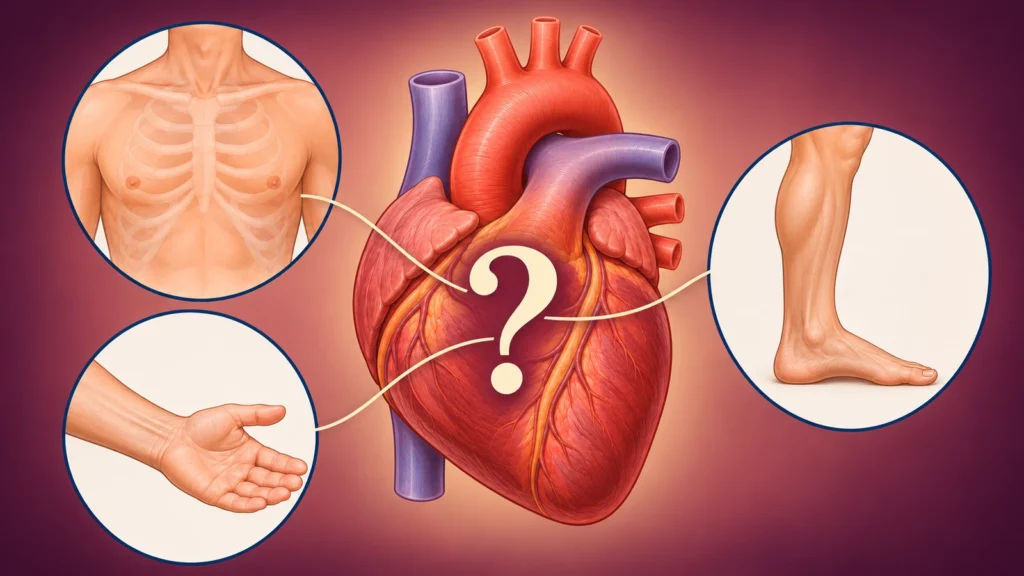
Heart bypass grafts often come from the chest wall, forearm, or leg. The two arteries are the internal thoracic artery and the radial artery. The great saphenous vein comes from the leg. In fact, a surgeon can use both an artery and a vein in one operation. The choice depends on which coronary arteries need bypasses and which grafts are suitable.
What does a bypass graft do?
Coronary arteries carry oxygen-rich blood to the heart muscle. If an artery narrows severely, less blood may reach the heart muscle it supplies. Bypass surgery creates a new route for blood to flow beyond the narrowing. The vessels used to create these routes are called heart bypass grafts. In other words, blood flows around the narrowed section. NHLBI patient guide Read more about how these narrowings develop in my guide to coronary artery disease.
The artery inside the chest wall
The left internal thoracic artery runs inside the chest wall. It sits just to the left of the breastbone. Your operation report may call it the LITA or LIMA. LIMA stands for left internal mammary artery. Both terms refer to the same vessel. Usually, the upper end stays connected to its original blood supply. The surgeon attaches the lower end to a coronary artery beyond the narrowing.
The left anterior descending artery, or LAD, runs down the front of the heart. It supplies a large part of the heart muscle. If the LAD needs a bypass, guidelines favor the left chest artery when suitable. This is because the graft tends to stay open for a long time. In selected patients, the right internal thoracic artery is another option. When weighing the use of both arteries, the team considers the potential benefits. It also considers the risk of infection or problems with breastbone healing. ACC/AHA/SCAI guideline
The radial artery in the forearm
You can feel the radial artery pulse on the thumb side of your wrist. Before using this artery, the team checks how well blood reaches the hand. It checks the other artery and the connections between the hand vessels. Also, a previous procedure through that wrist may affect the choice. The team may preserve the artery in people with advanced kidney disease. For example, they may need the artery for future dialysis access.
The heart team considers which narrowed coronary artery matters most after the LAD. For that target, guidelines prefer a suitable radial artery over a leg vein in isolated bypass surgery. That means bypass surgery without another heart operation at the same time. In long-term studies, the radial artery group did better on a combined outcome. Researchers counted deaths, heart attacks, and repeat procedures to restore blood flow together. However, the radial artery is not suitable for every patient or every coronary artery. ACC/AHA/SCAI guideline · Long-term study
The great saphenous vein in the leg
The great saphenous vein runs just under the skin along the inside of the leg. A segment of this vein can carry blood past a narrowed coronary artery. After the surgeon removes that segment, other veins still return blood to the heart.
A long, usable segment of vein can help when several coronary arteries need bypasses. It can also help when an artery is unsuitable for a particular target. Over time, some vein grafts narrow or close. Even so, the vein remains a useful option for some patients and coronary arteries. Prior vein removal or treatment can affect whether the team can use it. So can significant varicose changes. ESC guideline
How surgeons choose heart bypass grafts
Your surgeon looks at where each narrowing is and how severe it is. The team also checks the size and condition of the artery beyond the narrowing. Other factors include the condition of your arm and leg vessels and any previous procedures. Kidney disease and wound healing also matter. For example, one plan might use a chest artery for the LAD. A leg vein could supply a different area of the heart.
Your operation report may use shorthand such as LIMA–LAD. The first name is the graft. The second is the coronary artery it supplies. In this example, the surgeon connected the chest artery to the LAD. SVG means saphenous vein graft.
Before surgery, you can ask: “Which coronary arteries will you bypass, and why have you chosen each graft?” Tell the team if you have had an angiogram through your wrist. Also mention varicose vein surgery or other procedures on the vessels in your leg.
Watch my coronary bypass surgery video. This video contains footage of a real operation.
This article is for general information. Your own surgical plan should be discussed with the team caring for you.