What is Varicose Vein Disease?

After the blood pumped from the heart is distributed throughout the body through arteries, it returns to the heart through veins. There is no pump power that provides this blood flow that is against gravity. While breathing and using leg muscles (walking and doing sports) speed up this return, standing still or sitting for long periods of time makes it difficult for the blood to move in the veins. The valves in the veins prevent the blood from flowing backwards and ensure that the flow direction is only towards the heart. When these valves become insufficient, the blood begins to pool in the lower part of the body and increase the pressure in the veins. As a result, the expansion and/or tortuosity of the superficial veins is called varicose vein disease.
What are the complaints related to varicose veins?
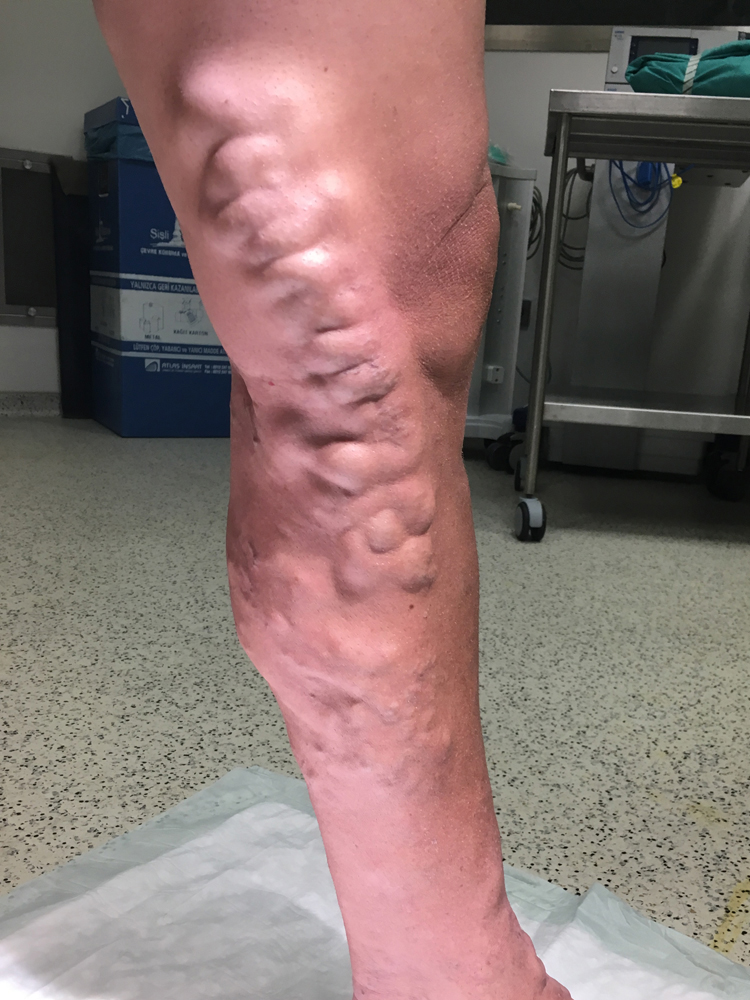

If you stand for a long time, you will feel pain and pressure in your varicose leg. These symptoms will regress after you lift your leg up. Other symptoms of the disease include a feeling of heaviness, itching, cramps, and edema (swelling) in your ankles. In untreated patients with advanced valve insufficiency, color changes and ulcers (open wounds) may occur around your ankles.
Who Gets Varicose Veins?
Varicose veins are three times more common in women than in men. Advanced age, pregnancy, standing for long periods of time, obesity and family history are risk factors for the disease.
What are the Treatment Methods?
The treatment method to be applied in varicose veins is determined according to the size of the varicose veins. In spider web-shaped capillary varicose veins (telangiectasia) with a diameter of 1-2 mm, laser or radiofrequency application from outside the body is preferred, while in veins with a diameter of 2-4 mm, the procedure called foam or needle treatment, called sclerotherapy, is preferred.

Surgical options come to the fore in veins with large diameters and protruding outside the body (packs). In the past, we applied open surgery, which we called “stripping” in almost all cases, but now we apply it to a very select few patients. The most frequently applied surgical methods today are: “Endovenous ablation” method, where we burn and dry the diseased vein inside the body with laser or radiofrequency, and “venous sealing” methods, where we block the diseased vein with special adhesives. In laser and radiofrequency methods applied by entering the vein, local anesthesia called tumescent anesthesia is applied to protect the surrounding tissues from the effect of heat and to prevent the patient from feeling pain. In the adhesive method, this anesthesia is not required. Patients who do not have any incisions can return to work on the same day. For this reason, this treatment is called “non-surgical varicose vein treatment” in patients who cannot have a cyst.
Who Should You See for Varicose Vein Surgery?
In our country, cardiovascular surgery specialization is provided by cardiovascular surgery clinics. Therefore, the physician who treats varicose veins must be a cardiovascular surgeon.
Our Varicose Vein Surgery Video
